
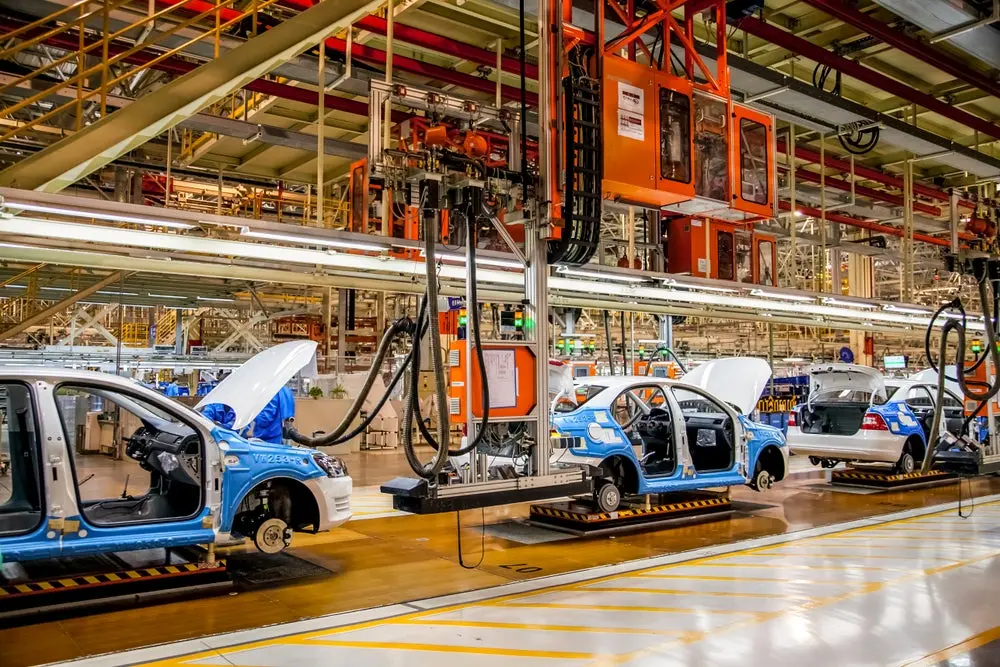
China’s automotive industry concluded the year 2025 by setting historic records, further cementing its position as the world’s largest vehicle producer while also emerging as a central hub of innovation.
According to data from the China Association of Automobile Manufacturers (CAAM), vehicle production and sales in China surpassed 34 million units in 2025. This achievement marked the country’s 17th consecutive year at the top of the global automotive industry. At the same time, China successfully completed its 14th Five-Year Plan, which was implemented from 2021 to 2025.
Sustained Growth and Record-Breaking Performance
In 2025, vehicle production in China reached 34.531 million units, representing a 10.4% increase compared with 2024. Meanwhile, vehicle sales rose by 9.4% year-on-year to 34.4 million units. For the third consecutive year, both production and sales exceeded the 30-million-unit mark.
Qi Shi-hua, Deputy Secretary-General of CAAM, described the growth as exceeding expectations. According to him, this expansion was driven by equipment upgrades, the launch of new products, and sustained consumer demand for new vehicles.
New Energy Vehicles (NEVs) Surpass 50% Market Share
The primary driver behind China’s remarkable automotive production growth has been the new energy vehicle (NEV) segment, which includes battery electric vehicles, plug-in hybrids, and fuel-cell vehicles. For the 11th consecutive year, China remained the world’s largest producer of NEVs.
In 2025, NEV production reached 16.626 million units, reflecting a 29% increase compared with the previous year. NEV sales totaled 16.49 million units, up 28.2% year-on-year.
For the first time in history, NEVs accounted for more than 50% of total new vehicle sales in China. Production of battery electric vehicles (BEVs) reached 10.737 million units, while output of plug-in hybrid electric vehicles (PHEVs) totaled 5.881 million units in 2025.
Export Surge and Expanding Global Presence
In 2025, China’s automotive industry further strengthened its position as a global export hub. Vehicle exports rose by 21.1% to 7.098 million units. Notably, exports of new energy vehicles doubled during the year, with China exporting 2.615 million NEVs in 2025.
Among Chinese vehicle exporters, Chery remained the largest, exporting 1.344 million units. BYD ranked second with exports of 1.054 million vehicles.
Deeper Integration of Western Brands in China
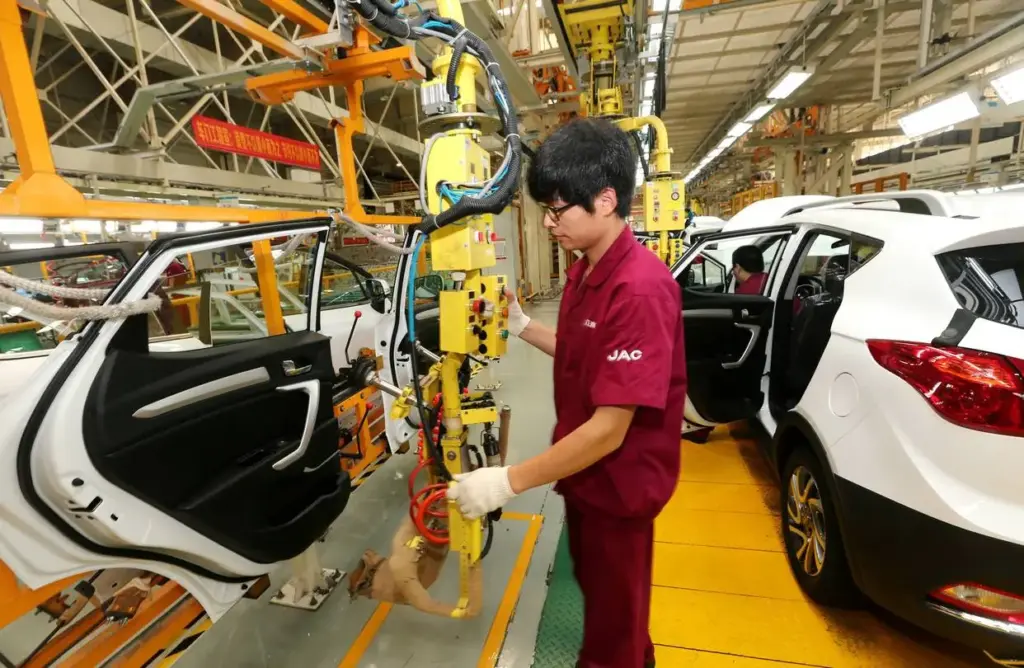
Economic experts emphasize that China’s competitiveness is not solely the result of low pricing; rather, it is rooted in continuous innovation and strong supply-chain advantages. These factors have encouraged major global automakers to deepen their presence in China in order to benefit from the country’s automotive ecosystem.
German automotive giant Volkswagen opened its first fully comprehensive R&D center outside Germany in Anhui Province, China. This move is expected to reduce the development cycle for new models to 24–30 months.
BMW has integrated its artificial intelligence ecosystem in China with Chinese startup DeepSeek. Meanwhile, U.S.-based Ford leveraged China’s supply chain to offset losses accumulated over the previous seven years, returning to profitability in 2024. Ford’s exports from China increased by more than 60% in 2024.
Japanese automakers such as Toyota and Honda have also continued to grow through cooperation with the GAC Group in China.
Expansion of Chinese Brands in Global Markets
Alongside rising foreign investment in China, Chinese automakers have increased their investments abroad. In 2025, Chinese brands accounted for approximately 70% of the domestic passenger vehicle market. BYD, SAIC, Geely, FAW, and Changan held the largest shares of China’s auto market while simultaneously expanding their global operations.
Chery, China’s largest vehicle exporter, has established 16 production bases in countries including Brazil, Iran, and Russia. The company is also cooperating with local partners in Spain to produce electric vehicles.
Recent developments indicate that China’s automotive industry is transitioning from a traditional business model to a new one. In this emerging model, overseas production of Chinese vehicles and the creation of shared industrial ecosystems with other automakers have become the primary pillars of growth.