
Korean automakers are well known for dramatically redesigning their vehicles whenever a new generation is introduced, and the all-new Elantra is no exception.
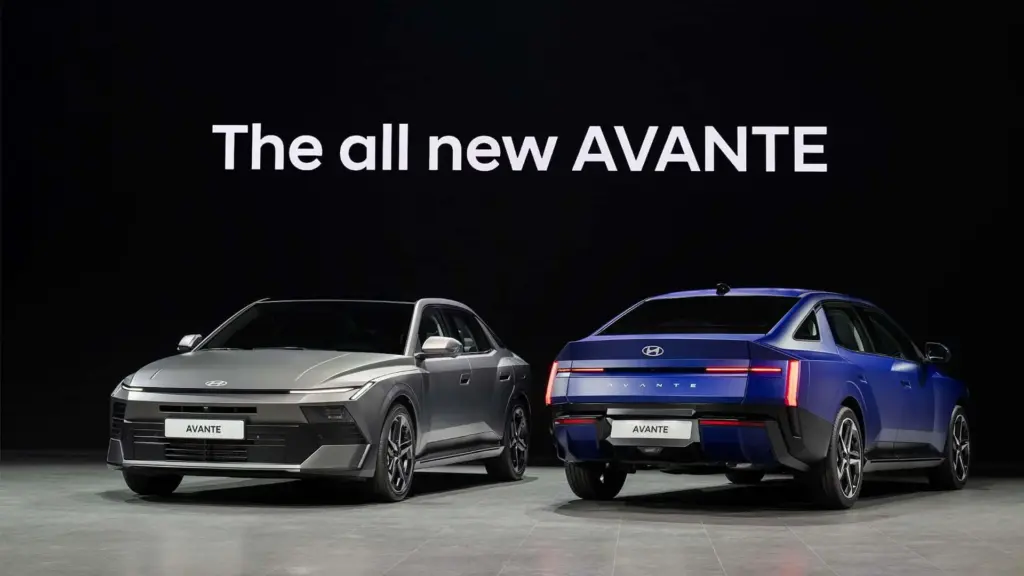
The eighth-generation Elantra, unveiled today at the 2026 Busan Mobility Show in South Korea—where the compact sedan is sold as the Avante—features a completely different appearance compared to its predecessor. The changes extend far beyond the exterior, as the cabin has also been thoroughly redesigned and bears little resemblance to the outgoing model.
Bold Exterior Redesign and Larger Dimensions
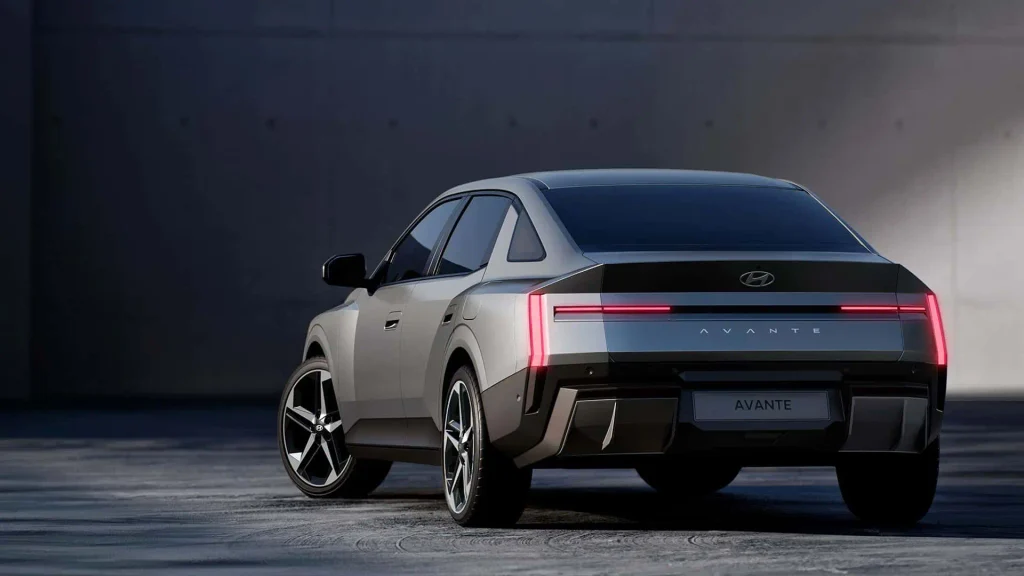
Inspired by futuristic design elements reminiscent of Iron Man, the new Elantra features muscular, flared fenders and flush-mounted door handles. Even without looking at the specifications, the addition of a rear quarter window immediately suggests that this is a larger vehicle. The triangular glass panel behind the rear doors enhances the sedan’s side profile while emphasizing its increased size.
Overall length has grown by 55 mm to 4,765 mm, with 30 mm of that increase allocated to the wheelbase, resulting in a more spacious cabin. The redesigned sedan now offers a generous 2,750 mm wheelbase.
Hyundai goes so far as to claim that the interior space of the new Elantra is nearly comparable to that of a midsize sedan such as the Sonata. In addition to being longer, the eighth-generation model is now 30 mm wider, measuring 1,855 mm in width. Height has also increased slightly to 1,425 mm. While Hyundai has not specified how much additional headroom this provides, the flatter roofline appears likely to improve rear-seat headroom.
“Art of Steel” Design Language and a Modern Cabin
According to Hyundai, the new Elantra adopts the company’s new “Art of Steel” design philosophy, characterized by sharp lines and crisp body creases. The front and rear lighting signatures form an “H” motif, while a full-width ducktail spoiler gives the rear end a more distinctive appearance. Two-tone 18-inch five-spoke alloy wheels complement the car’s angular styling.
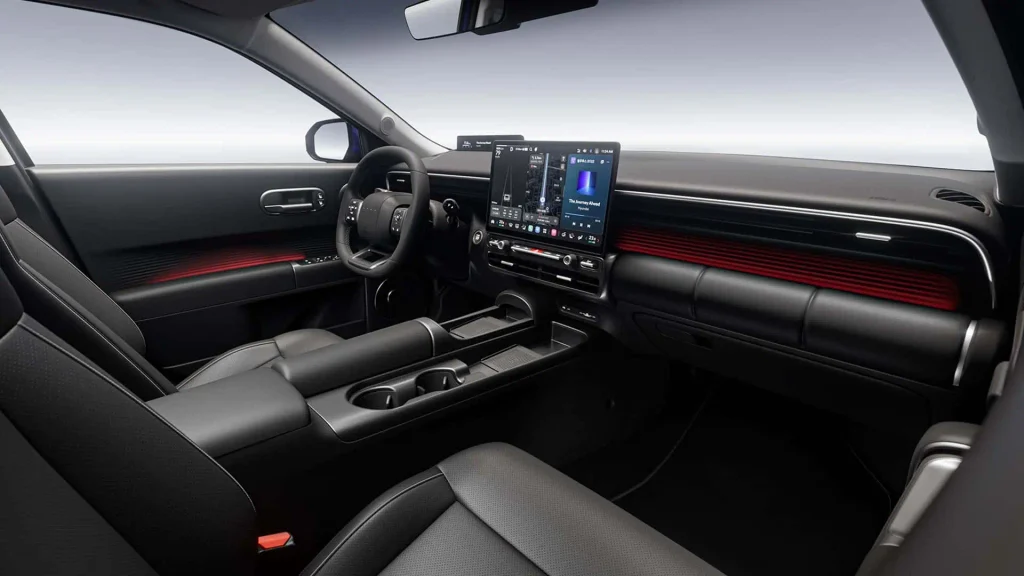
Inside, the cabin delivers the feel of a vehicle from a higher segment and introduces Hyundai’s next-generation Android-based Pleos infotainment system. A 12.9-inch touchscreen comes standard, while buyers can upgrade to a larger 14.6-inch display.
Fortunately, the larger screen has not eliminated physical controls. Although the number of buttons has been reduced, traditional controls remain below the display, providing easier access to essential functions.
Interior Updates and Improved Practicality
A compact horizontal digital instrument cluster is positioned on top of the dashboard directly within the driver’s line of sight.
The Hyundai logo has been removed from the steering wheel and replaced by four dots representing the Morse code for the letter “H,” a design element already seen on several other Hyundai models.
The gear selector has been relocated to the steering column, freeing up space in the lower center console. That extra room now accommodates two wireless charging pads.
Elsewhere in the cabin, ambient lighting stretches across the dashboard and door panels, while two large cupholders sit ahead of the center armrest. Conventional buttons remain on both the steering wheel and the driver’s door. The passenger-side dashboard features a soft, cushion-like finish that creates a more premium atmosphere than previous Elantra models.
Powertrains and Hybrid Technology
In South Korea, Hyundai will offer the Avante (Elantra) with a naturally aspirated 2.0-liter gasoline engine producing 147 horsepower—an increase of 25 hp over the previous model.
Customers will also be able to choose a more efficient 1.6-liter hybrid powertrain, which now delivers 155 horsepower thanks to a slight power increase.
The hybrid version incorporates Hyundai’s latest regenerative braking technology along with a new Stay Mode feature. Similar to a fully electric vehicle, this function allows occupants to power the climate control system and infotainment system using the battery while the engine remains off.
Sales of the new Avante in South Korea will begin in the third quarter of this year, while the global version of the Elantra is expected to reach international markets in 2027.
Bold Evolution
Hyundai has built a reputation for bold styling, and the eighth-generation Elantra certainly lives up to that image. Regardless of the badge it wears, the launch of any new sedan in today’s market is welcome news, and it’s encouraging to see that the high-volume, affordable sedan segment continues to receive significant investment.
There is even more to look forward to, as Hyundai has confirmed that a new Elantra N performance model is on the way, featuring a larger and more powerful engine than before. However, with the standard models arriving first, enthusiasts will likely have to wait a few more years before the next-generation Elantra N makes its debut.