

Saman Firoozi, CEO of Kerman Motor, referring to Kerman Motor’s more than 30 years of experience in Iran’s automotive industry and its collaborations with three international carmakers (General Motors, Volkswagen, and Hyundai), announced that the company is ready to acquire a controlling stake in SAIPA. He stated that within five years, they aim to create the largest automotive group in the country and elevate it to rank among the world’s top 10 automakers.
SAIPA, one of the two main pillars of Iran’s automotive industry, is currently at the center of much attention and speculation. The future of this giant automaker is tied to two completely different and highly uncertain scenarios. On one hand, the private and well-established Kerman Motor has unveiled a comprehensive and ambitious plan, declaring its readiness to take over SAIPA’s management and implement a fundamental transformation. On the other hand, there are rumors of possible involvement by Dot One Holding and Babak Zanjani, a controversial and notorious figure in Iran’s economy, in the industry — and even in SAIPA itself. The presence of multiple contenders seeking to take over SAIPA’s management, and these two divergent paths, prompted Saman Firoozi, CEO of Kerman Motor, to speak bluntly. He emphasized that they are entering the competition for the 42% stake in SAIPA backed by industrial expertise, not showmanship. In his latest interview, he outlined Kerman Motor’s major plans should they gain control of SAIPA — plans that would not only reshape SAIPA’s future but also significantly impact the broader automotive industry and the country’s economy.
The fate of Saipa with Kerman Motor
.jpg)
Saman Firoozi, CEO of Kerman Motor, citing the company’s more than 30 years of experience in Iran’s automotive industry and its history of cooperation with three leading international carmakers—General Motors, Volkswagen, and Hyundai—has announced Kerman Motor’s full readiness to acquire a controlling stake in SAIPA. In his latest statement and an open letter, he declared that Kerman Motor has developed a comprehensive five-year plan which, if implemented, would not only create the largest automotive group in the country but also elevate it into the ranks of the world’s top 10 automakers.
In part of his remarks, the CEO of Kerman Motor criticized certain shallow, promotional slogans that, he argued, are put forward without a deep understanding of the complexities of the automotive industry. He stressed that such approaches—which often aim to create a commercial showcase under the banner of “production”—can in practice lead to the elimination of thousands of jobs and the destruction of the country’s automotive supply chain. According to him, despite its 60-year history, Iran’s automotive industry has fallen behind its younger global competitors, and it is now time to make up for this lag through realistic and expert-driven planning.
Kermani’s comprehensive plan for Saipa
.jpg)
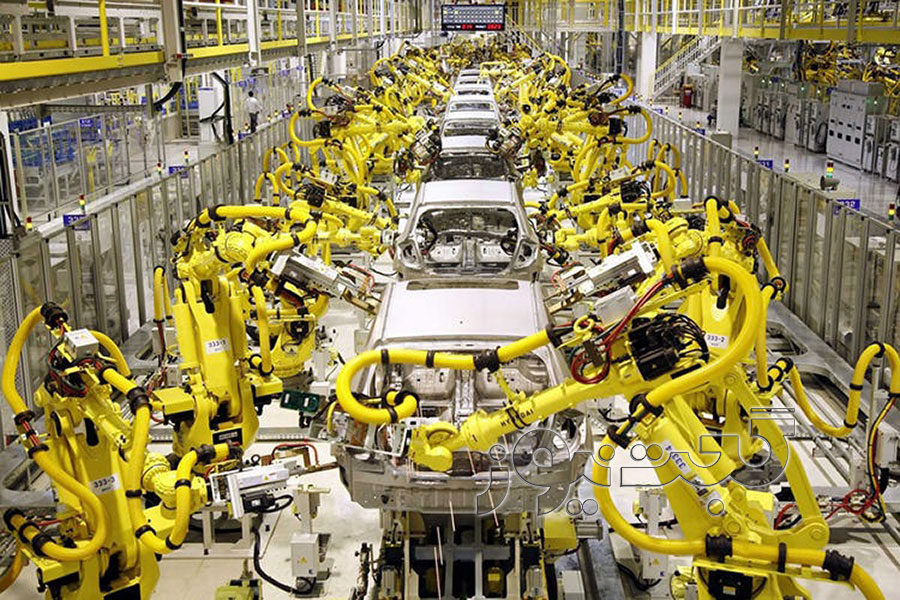
Kerman Motor has outlined its vision for transforming and managing SAIPA through a six-part strategic plan. The first, and perhaps most ambitious, element of this plan is to increase annual production to one million vehicles. This goal is to be achieved by intelligently integrating the existing production capacities of Kerman Motor and SAIPA—including pressing, bodywork, engine and gearbox production, painting, and assembly lines—without requiring new capital investment to create initial capacity. Achieving this high production volume will not only make optimal use of existing facilities but also significantly reduce production costs, ultimately lowering the final vehicle price for consumers and enabling broader market availability of products.
Alongside this scale-up, Kerman Motor’s plan emphasizes reducing logistics costs and deepening local production. By leveraging economies of scale and appropriately distributing production lines across both companies’ sites, transportation and supply-chain costs will be optimized. At the same time, the process of localizing and manufacturing domestic parts will be pursued with greater speed and seriousness, which will directly result in sustainable job creation within the country and reduce the automotive industry’s dependence on foreign currency.
.jpg)
To modernize and increase the competitiveness of its products, Kerman Motor has outlined an extensive plan for technology development and the introduction of new models by SAIPA. Under this plan, starting from the second year after the acquisition, SAIPA will be able to add three completely new, export-competitive vehicle models to its product lineup annually, continuing this pace through the fifth year. The introduction of advanced technologies and more modern, appealing designs will mean safer, more attractive, and fuel-efficient cars that not only meet domestic market demand but also have strong potential for export and generating foreign currency for the country.
Achieving this important goal will require substantial investment, for which a $1 billion investment over the next five years has been planned. This significant capital is expected to be raised through the capital market, shareholder contributions, and the group’s retained earnings, and will be directly allocated to developing advanced technologies and modernizing key production lines. These investments will help improve production quality, deliver newer and more competitive products at the global level, and ultimately enable a stronger presence in international markets. Of course, none of these goals will be achievable without structural and managerial reforms and ensuring sustainable profitability.
برKerman Motor’s central proposal for managing SAIPA’s future centers on reforming its managerial and organizational structure with the goal of ensuring stable leadership and making the organization more agile. This involves eliminating and dissolving redundant or unrelated subsidiaries outside the core automotive business, monetizing non-productive assets, and channeling the resulting financial resources into the production cycle to improve the company’s liquidity. This structural cleanup and optimization is expected to increase transparency, speed up decision-making, and create a more accountable organization—all of which will benefit the end consumer and the entire automotive value chain. Ultimately, all of these plans are geared toward ensuring sustainable profitability for the new automotive group. This profitability will be achieved through optimal and diversified product portfolio management, continuous reduction of overhead and logistics costs, reaching economic production volumes, and boosting efficiency at all operational levels. For a major automaker, profitability means not just returning value to shareholders, but also ensuring the continuity of production, preserving and even expanding job opportunities, and improving benefits for thousands of workers and specialists employed in the industry.
Can Kerman Motor become SAIPA’s savior?
The plan presented by Kerman Motor is ambitious yet structured. At a time when Iran’s automotive industry faces challenges such as accumulated losses, low productivity, and weak competitiveness, the entry of an experienced private-sector player with a clear vision could signal real transformation. The integration of Kerman Motor’s and SAIPA’s capacities—if accompanied by government support and the removal of structural barriers—could enable a production surge, increase exports, lower production costs, and attract foreign investment. However, realizing these goals depends on several key factors:
Political will and practical government support for genuine management transfer
Preserving managerial independence and preventing external interference
Ensuring financial and organizational transparency at SAIPA
Improving infrastructure and strengthening the domestic supply chain
On the other hand, Kerman Motor’s declared readiness to sell its existing stake if the government fails to make a decision can be seen as a strategic move to accelerate the privatization process. If this roadmap is properly implemented, it could transform SAIPA from a semi-active state-run enterprise into a modern player in the regional automotive market. Otherwise, another opportunity for real change will be lost.
This strategic plan is the result of over a year of expert study and analysis by Kerman Motor, and its successful implementation—given SAIPA’s current condition and the country’s circumstances—requires strong political will and serious government decision-making in line with the leadership’s emphasis on delegating responsibilities to qualified private-sector actors.
Kerman Motor will await the government’s final decision, particularly that of the esteemed President. Should no appropriate action be taken by the authorities, the company has announced its readiness to sell approximately 9% of its existing stake in SAIPA, reallocating the proceeds to fund its own strategic development plans with the aim of becoming the most valuable automaker in the Middle East and achieving its ambitious goals.