According to reports from Chinese media, this advanced driver assistance system (ADAS) will be available by the end of March this year. It is said that the Denza N7 SUV will be the first among more than 20 Chinese models to be equipped with this system. Afterward, the technology will gradually be implemented in other BYD vehicles as well.
Sources close to BYD state that this feature will initially launch in major cities such as Shenzhen. Until last year, the majority of BYD’s sales were from mid-range vehicles lacking advanced driver assistance systems. However, higher-end companies such as NIO, Xpeng, Huawei, and Li Auto have already been offering smart driving technology as a standard feature. Since BYD has now entered the luxury electric vehicle market with brands like Yangwang and Fang Cheng, it is also developing advanced driver-assistance technologies.
It appears that BYD has developed this new technology in-house and has manufactured most of the components itself. Last month, the automaker unveiled its Xuanzhi architecture, and the company’s CEO revealed that BYD’s smart driving team consists of more than 4,000 members. In comparison, the smart driving teams of NIO, Xpeng, and other brands have between 1000 to 1500 people.
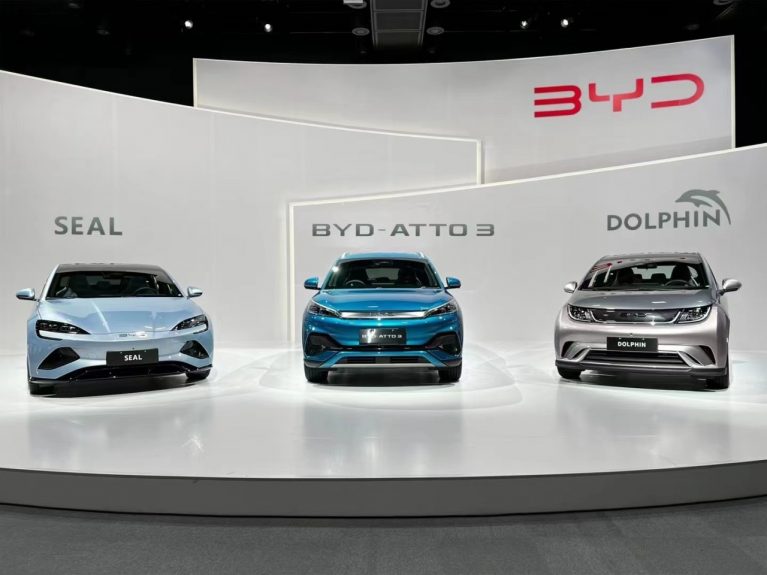
Chinese companies are currently investing $14 billion in the development of smart driving technology. In the future, BYD plans to equip all vehicles priced over $42,000 with this new technology as standard, while also offering it as an option for more affordable models like the Dolphin and Atto 3. The CEO mentioned that over 57% of BYD vehicles sold last year were equipped with smart driving systems. While BYD previously sourced this technology from other brands, developing it internally will lead to cost reductions.
It is also worth noting that BYD is preparing to launch the Yangwang U7, a luxury electric sedan with around 1300 horsepower and an 800-kilometer range. This vehicle will be positioned alongside the luxury off-roader U8, which has a price exceeding $150,000 and will likely be equipped with the same smart driving system. With the introduction of more luxurious vehicles, BYD aims to offer advanced technology — a move that seems logical. The use of integrated software similar to Tesla and Rivian allows BYD to more easily provide optional features to buyers and to fix product issues remotely