

Kerman Motor Company was established in 1994 (1373 in the Persian calendar) with the goal of creating employment opportunities for skilled and underprivileged individuals in the Bam region. As one of the subsidiaries of the Kerman Automotive Industries Holding, it became Iran’s first private (non-governmental) automaker in the field of passenger car production. After installing and commissioning its equipment and machinery with the help of experienced and expert personnel, the company succeeded in launching its first production line for the Daewoo Cielo in 1996 (1375).
In 2000 (1379), the company produced the Daewoo Matiz and brought it to market. However, following General Motors’ acquisition of Daewoo and the imposition of sanctions, GM Daewoo’s new management refused to continue its partnership with Kerman Motor.
Under these circumstances, the company’s main strategy was to sign a contract with Lifan in 2007 (1386), producing the Lifan 520 and subsequently the Lifan 520i. These models received an exceptional reception in the market. Next, the company introduced the Lifan 620 with a 1.6-liter engine, gaining a greater market share.
To further expand its product lineup, Kerman Motor introduced the Lifan X60 SUV, which became one of the best-selling models in its class, followed by the addition of the Lifan X60 automatic version to its popular offerings. Other products included the X50 crossover in both manual and CVT variants, which became popular among younger buyers. Another of Lifan’s most advanced models was the Lifan 820, which achieved unprecedented success in the market thanks to its price advantage, engine power, and lack of domestic competition.
To diversify its offerings further, Kerman Motor signed an agreement with JAC, one of China’s largest automotive brands, resulting in the production of the J3 in 2013 (1392). This partnership later produced the J5 in both manual and automatic versions with enhanced features, enjoying exceptional customer demand.
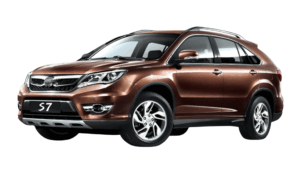
At the end of 2014 (1393), the S5 SUV with a manual gearbox and 2000cc turbocharged engine was launched, which has remained one of the company’s highest-volume and most in-demand products. In recent years, models such as the JAC J4, S3, and facelifted S5, along with two KMC brands (KMC T8 and KMC K7), have been among Kerman Motor’s offerings, enjoying exceptional popularity with buyers.
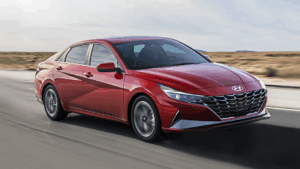
Another major achievement was the signing of a cooperation agreement with Hyundai of South Korea in 2016 (1395), shortly after international sanctions on Iran were lifted. This collaboration led to local production of three Hyundai models: i10, i20, and Accent. It’s worth noting that before the 2018 (1397) sanctions, Kerman Motor, thanks to the production and sales of these models plus other Hyundai models such as Elantra, Sonata, Tucson, Santa Fe, and Azera, achieved the highest Hyundai sales ranking among countries in the Middle East and North Africa.
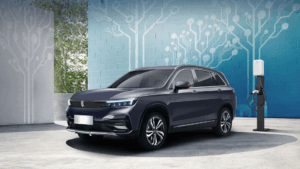
Building on this experience, the company’s managers have aimed to develop and expand production in line with modern global technology. With over 20 trillion rials (approximately 2,000 billion tomans) of investment, they are pursuing a self-sufficiency plan to achieve 100% local production of the J4 sedan in both electric and gasoline versions in cooperation with a domestic knowledge-based company by the end of 2023 (1401).
Customer satisfaction and trust remain central goals for Kerman Motor. Despite internal challenges and international sanctions, the company is committed to maintaining and continuously improving quality while embracing scientific and technological advancements in the automotive industry. The company also seeks organizational excellence, fostering talent growth, encouraging teamwork, empathy, and broad employee participation in all activities.
For this purpose, Kerman Motor has decided to implement a quality management system to establish a commitment to continuous improvement of its effectiveness and to define and review its quantitative and qualitative goals accordingly.
Kerman Motor considers innovation and the development of technology and resources (both quantitatively and qualitatively) among its core missions. It plans and carries out its activities in line with organizational development and that of its affiliated workgroups, all while remaining committed to maintaining a healthy environment.
Geographical Location and Staff Count
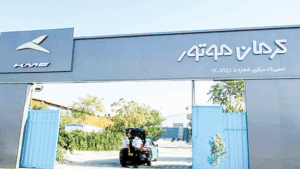
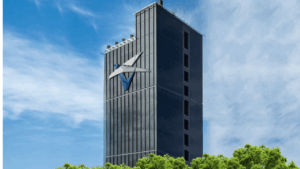
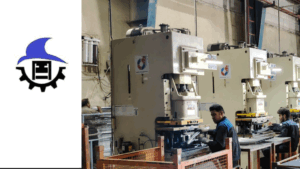
The company’s factory is located in the Arg-e Jadid Special Economic Zone, 10 km along the Bam–Zahedan road, covering an area of over 110 hectares. It houses three major halls—body, paint, and assembly—each spanning 11,000 square meters. The head office is located at Kilometer 16, Special Road, Nakhl Boulevard, Sadaf Office Building.
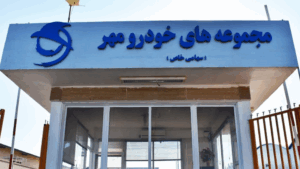
The combined workforce of specialists and experts in the Bam region and the head office exceeds 3,400 people. In addition, several subsidiaries of Kerman Automotive Industries—such as Arman Motor, KADAK, Negin Bam, Ghavaeh Moharrekeh, Khodroye Mehr, and Khadamat Tejarat Bam Khodro—with over 160 active dealerships across all provinces and thousands of skilled workers support the company in vehicle assembly, parts production, painting, and after-sales services for its manufactured products.
Over the years, this group has prioritized developing and diversifying its products in line with cutting-edge global technology and remains dedicated to improving services and achieving customer satisfaction.